Schools often use universal anti-bullying programmes because every student should benefit from clear rules, trained staff and a safer school climate. That foundation matters. Yet a universal approach can become identity-blind when it assumes that bullying has the same causes, meanings and consequences for all children.
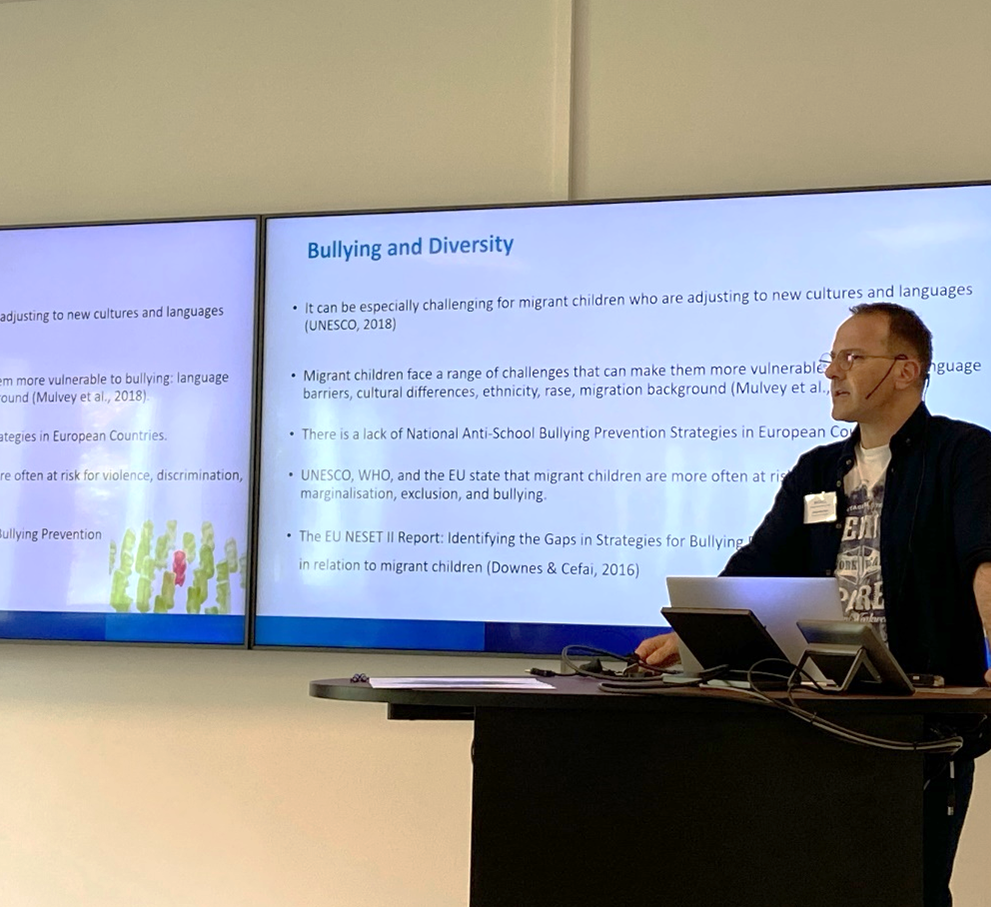
In comparative research covering 43 anti-bullying programmes across five European countries, very few programmes explicitly addressed immigrant or minority children. A related analysis of legal frameworks in six countries found broad commitments to safety and non-discrimination, but limited operational guidance on how schools should respond when bullying is connected to migration, ethnicity, religion or language.
Identity can be part of the mechanism
A child may be targeted through racialised language, religious stereotyping, an accent, clothing, name or migration history. The incident may still meet a general definition of bullying, but an identity-blind response can miss why the child was targeted and why reporting feels risky. Children may fear that adults will minimise the prejudice, misunderstand family circumstances or treat cultural difference itself as the problem.
This does not mean that every conflict involving a migrant child is culturally motivated. It means that assessment should make room for identity and context instead of excluding them in advance.
Combine universal and targeted prevention
Whole-school measures remain important: shared definitions, reliable reporting routes, supervision, classroom work and consistent follow-up. They should be combined with targeted capacity where the evidence shows a need. Schools can train staff to recognise identity-based bullying, review whether reporting systems are accessible to families with different languages, and ensure that responses address both the behaviour and its discriminatory content.
Ask better questions about the evidence
A programme can be evidence-based and still have limited evidence for particular groups. Schools and decision-makers should ask who participated in evaluation studies, whether outcomes were examined for migrant and minority students, and whether programme fidelity leaves room for responsible local adaptation. Disaggregated data can reveal unequal patterns, but it must be collected carefully, ethically and with a clear purpose.
Strengthen intercultural practice—not cultural assumptions
Intercultural competence is not a catalogue of facts about groups. It is the ability to examine one’s own assumptions, communicate across differences, recognise unequal power and remain curious about the child’s specific experience. Professionals should avoid explaining away distress as “cultural” while also avoiding a supposedly neutral response that ignores discrimination.
Include children and families in prevention design
Students can identify places, online spaces and forms of language that adults do not see. Children with migrant backgrounds should therefore help schools test reporting routes, classroom materials and peer-support activities. Families and migrant-led organisations can also improve trust, communication and contextual understanding, while statutory responsibility remains with the school.
Equity does not require abandoning universal prevention. It requires asking whether universal structures work equally well for everyone—and adding the competence, participation and targeted measures needed when they do not.
Research references
Gutzwiller-Helfenfinger, E., Bozic, A., Støen, J., et al. (2024). How do anti-bullying programs target immigrant children and youth and what is their evidence base? In International Perspectives on Migration, Bullying, and School. DOI/source ↗
Støen, J., Gutzwiller-Helfenfinger, E., Ucar, S., et al. (2024). Cross-national legal frameworks relating to school bullying and migration in six countries. DOI/source ↗

Associate Professor at the University of Stavanger. His work includes school bullying, migration, inclusion, intercultural practice and evidence-based prevention.
About the author →